2-HEA vs HEMA: Key Differences and How to Choose
Both are hydroxy-functional monomers. The differences in cure behaviour, film properties and handling are what matter in practice.
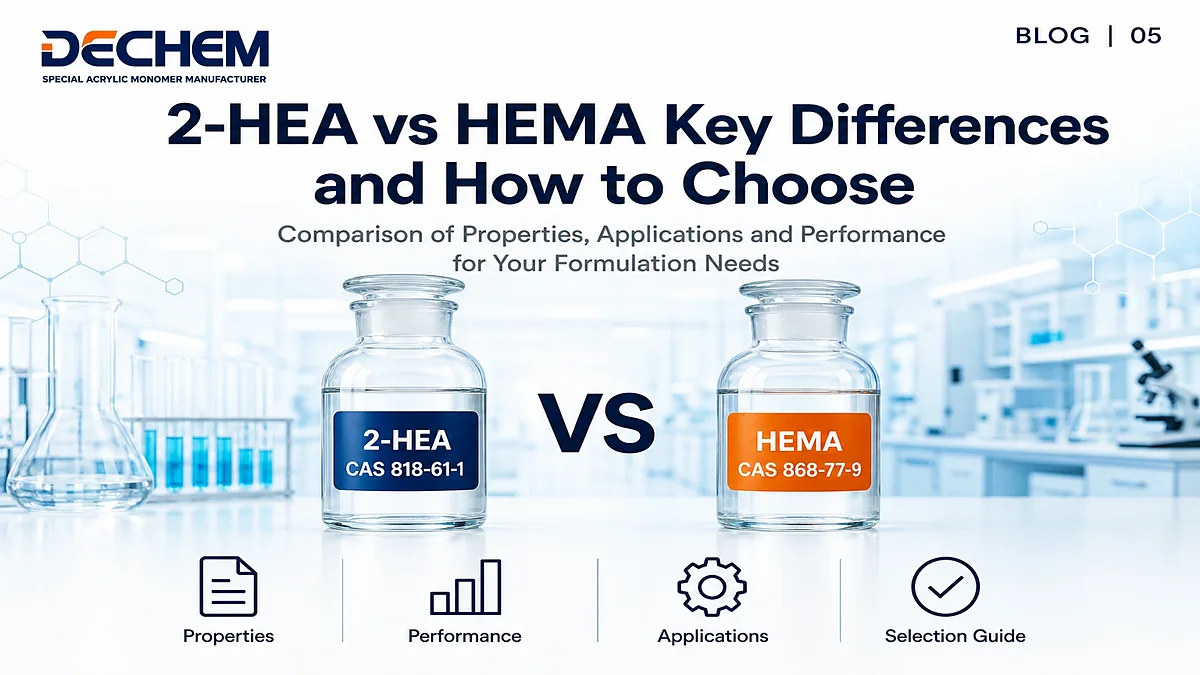
2-Hydroxyethyl Acrylate (2-HEA, CAS 818-61-1) and Hydroxyethyl Methacrylate (HEMA, CAS 868-77-9) are often listed together because both are hydroxy-functional monomers with the same general purpose. Specifying between them requires a clearer look at four things.
1. Cure behaviour
The acrylate double bond in 2-HEA polymerises faster than the methacrylate double bond in HEMA. In high-throughput UV curing, this difference is directly visible in line speed. In low-intensity or long-heat-cure systems, it is much less significant.
2. Cured film properties
Methacrylate polymers, including HEMA, are more resistant to hydrolysis and generally more thermally stable. HEMA-based films tend to be harder and more durable. Acrylate systems such as 2-HEA generally give a slightly more flexible, higher-movement film at equal functionality.
3. Solubility and formulation behaviour
The methacrylate group gives HEMA a different solvent profile and often a longer pot life in comparable formulations. This matters where a plant runs a long shift and cannot tolerate premature gelation.
4. Handling and documentation
Both are handled under the same general precautions: cool ventilated storage, tightly closed containers, protection from heat, sunlight and ignition sources, with the safety data sheet consulted before handling. Both have REACH documentation available.
A straightforward way to decide
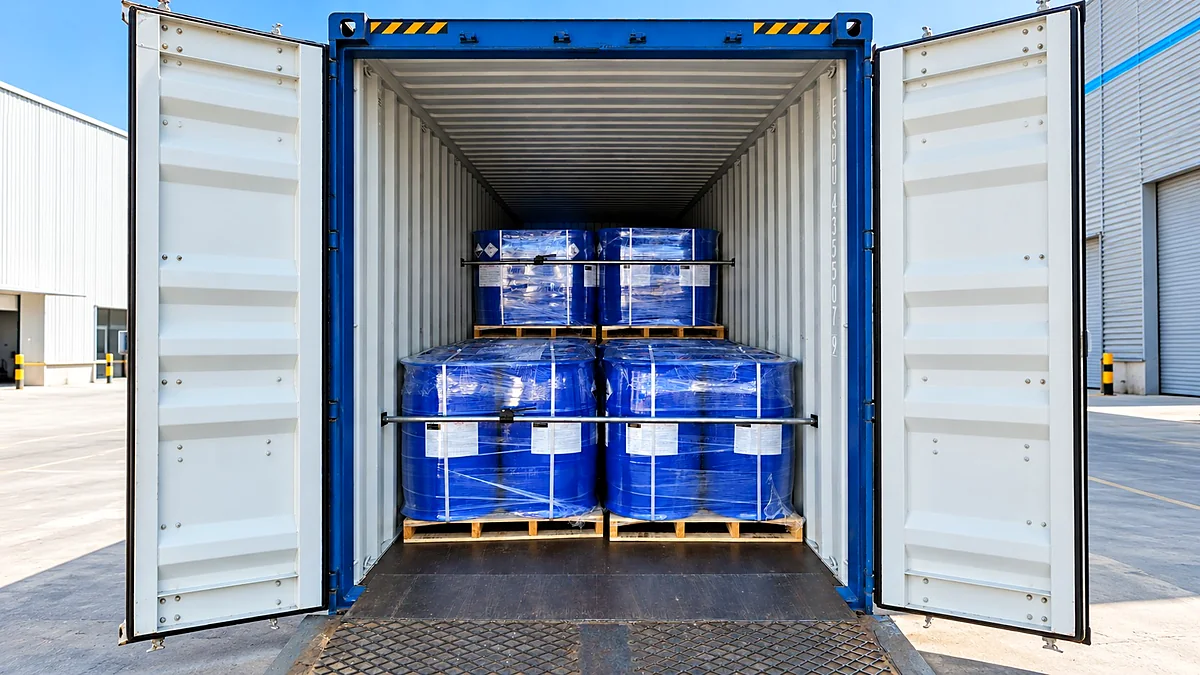
If your existing formulation works with an acrylate and you are not near a performance limit, stay with 2-HEA. If you are hitting hydrolysis resistance, thermal stability or film hardness limits, trial HEMA. Both are supplied in 200 kg HDPE drums, with ISO tanks and bulk containers available, and the TDS for the specific grade is the document that defines the specification.