2-HPA: Properties, Uses and Industrial Applications
A hydroxy-functional acrylate with good flexibility and high polymerisation activity, and where it fits in coatings and resin systems.
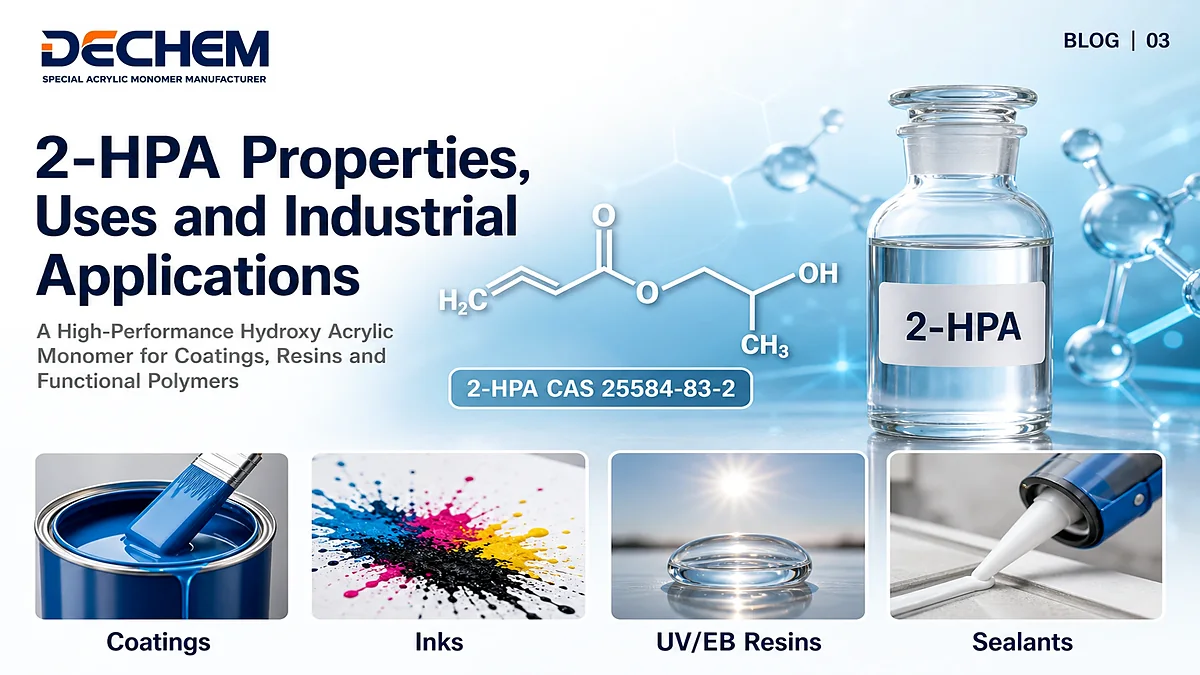
2-Hydroxypropyl Acrylate (2-HPA), CAS 25584-83-2, is a hydroxy-functional acrylic monomer in which the hydroxyl-bearing side chain is one carbon longer than in 2-HEA.
What the longer chain changes
The practical effect of the propylene rather than ethylene group is increased flexibility in the cured film. The monomer still carries a single primary hydroxyl and the same acrylate double bond, so it functions as a hydroxy-functional building block in the same way as the rest of the family.
Typical technical properties as published in the TDS include purity of at least 97.0% by gas chromatography, water content not more than 0.20%, free acid not more than 0.50%, colour (APHA / Pt-Co) not more than 30, inhibitor 200 ± 20 ppm, density of 1.050 to 1.058 g/cm³ at 20 °C, viscosity of 7 to 10 mPa·s at 25 °C, and a flash point of 96 °C closed cup.
Application areas
Acrylic resins. 2-HPA contributes hydroxyl functionality for resin modification and crosslinking reactions, improving flexibility and adhesion while enhancing weather resistance.
Waterborne and industrial coatings. The flexibility it imparts is valuable in systems subject to movement or thermal cycling, where a harder and more brittle film would be at a disadvantage.
Adhesives. Used where a balance of adhesion and flexibility is needed in the cured bond line.
Printing inks and specialty polymers. Applicable wherever a hydroxyl-functional acrylate with improved flexibility is required.
Points to confirm with your supplier
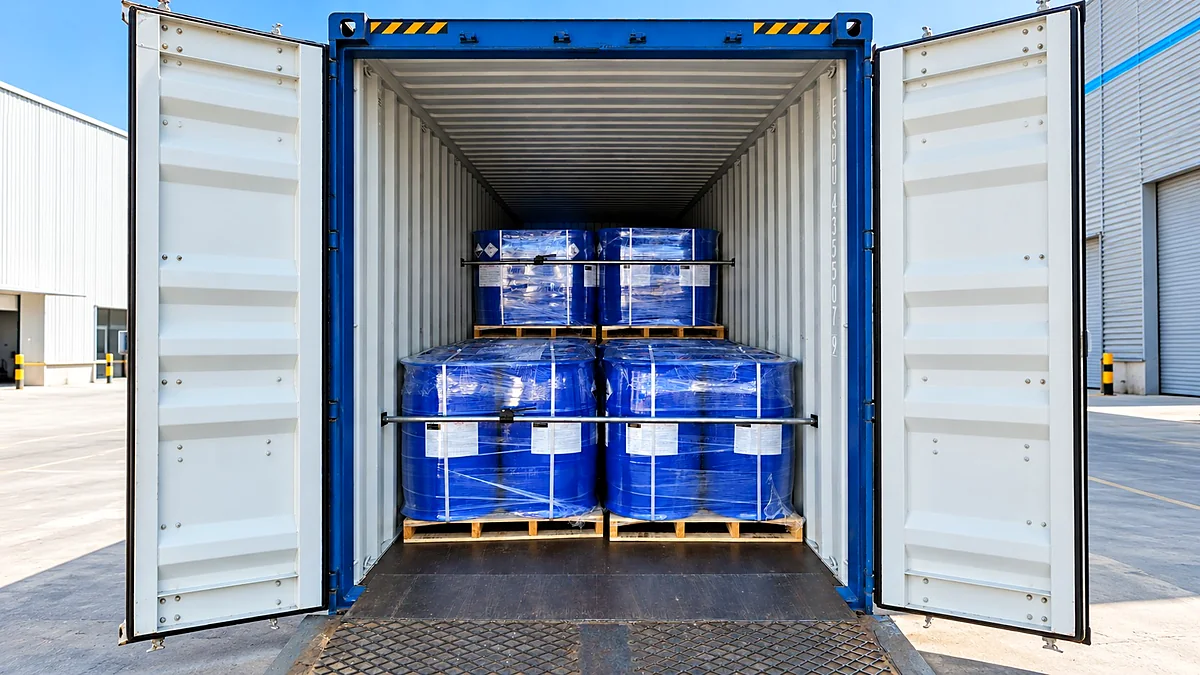
As with any monomer, the specification that matters is the one in the TDS for the grade you buy, together with the COA for the batch you receive. Beyond that, buyers typically want to confirm the packaging configuration appropriate to their delivery point and to review the safety data sheet for handling and import purposes.