2-HPA vs HPMA: Key Differences and Applications
One is an acrylate and one a methacrylate. The practical consequence shows up in film flexibility, cure rate and weather resistance.
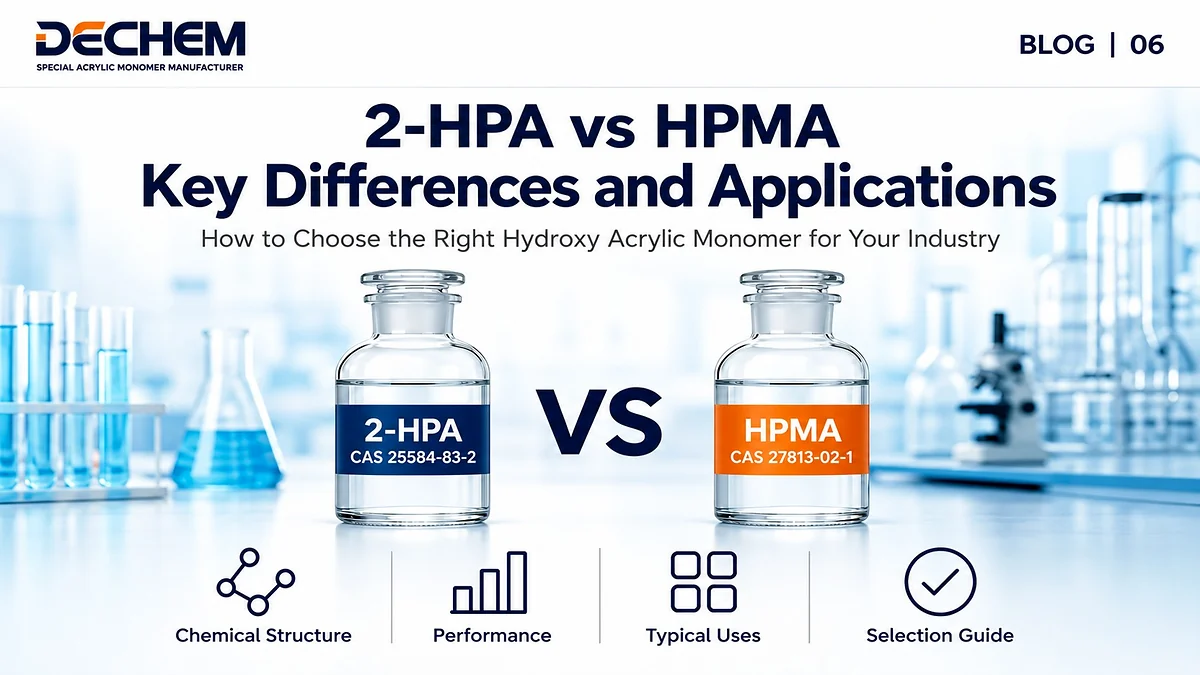
2-Hydroxypropyl Acrylate (2-HPA, CAS 25584-83-2) and Hydroxypropyl Methacrylate (HPMA, CAS 27813-02-1) sit at opposite ends of the same family, and the differences follow directly from one structural change.
The structural difference
2-HPA is an acrylate: the double bond is CH2=CH–. HPMA is a methacrylate: the double bond is CH2=C(CH3)–. Everything that follows — cure rate, film properties, solvent behaviour — comes from that methyl group and the three carbons of the propyl chain in the hydroxyl-bearing side arm.
Where 2-HPA leads
Flexibility. The propyl chain in 2-HPA gives a more flexible cured film than HPMA. Where a coating must accommodate substrate movement, thermal cycling or flexing, 2-HPA is generally the better starting point. Cure rate also favours 2-HPA in fast UV lines.
Where HPMA leads
Weather resistance and thermal stability. The methacrylate backbone gives HPMA better resistance to hydrolysis and strong performance in exterior and durable applications. If the cured film needs to hold up over time rather than flex, HPMA is the stronger choice.
Both remain hydroxy-functional
Whichever you select, the hydroxyl group stays available for crosslinking. That is what allows either monomer to be built into two-component or self-crosslinking coating and adhesive systems.
Document check before ordering
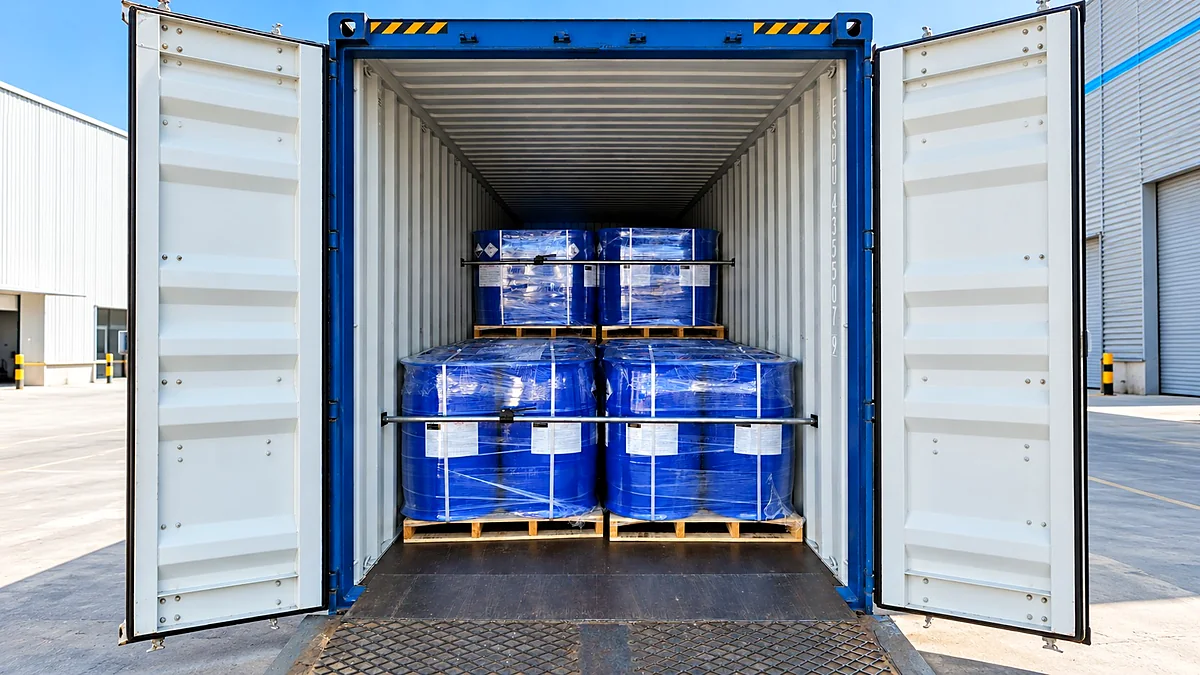
Request the TDS for the grade, the safety data sheet, and a sample COA. REACH documentation is available for HPMA and is listed on the product page. Packaging is 200 kg HDPE drums, with ISO tanks and bulk containers available for larger movements.