HPMA: Properties, Applications and Product Selection
A functional methacrylate with excellent polymerisation performance and good weather resistance, and how to choose between the four monomers.
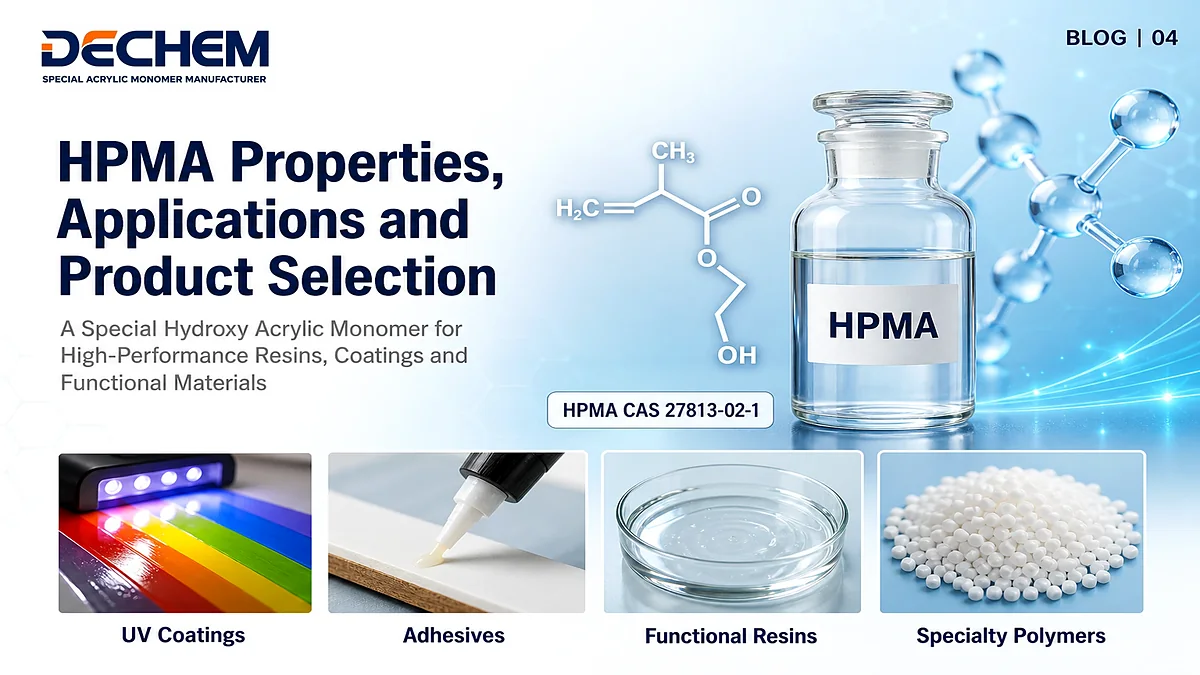
Hydroxypropyl Methacrylate (HPMA), CAS 27813-02-1, is a functional methacrylate monomer used in coatings, adhesives, specialty polymers and resin modification.
Where HPMA sits
HPMA combines the methacrylate backbone with a hydroxyl group. That combination makes it useful in systems that need hydroxyl-functional crosslinking while preferring a methacrylate chain: the cured film shows good weather resistance and strong polymerisation performance.
Typical published properties include purity of at least 97%, water content not more than 0.10%, acid value not more than 1.0 mg KOH/g, MEHQ stabilised, and density of approximately 1.03 g/cm³. The official TDS remains the reference for the grade you purchase.
Choosing between 2-HEA, HEMA, 2-HPA and HPMA
Choose 2-HEA (818-61-1) where you need the fastest cure and the hardest film, and the formulation is not sensitive to a slower pot life.
Choose HEMA (868-77-9) where hydrolysis resistance, thermal stability or a harder, more durable cured film matters, and the cure schedule can accommodate a slower reaction.
Choose 2-HPA (25584-83-2) where flexibility in the cured film is the priority, particularly in waterborne systems or coatings subject to movement.
Choose HPMA (27813-02-1) where you want methacrylate characteristics together with hydroxyl functionality — good weather resistance with crosslinking capability.
Practical selection advice
Decide the performance requirement first, then the process constraint second, then the commercial terms. Mixing the three in the opposite order is how specifications get changed mid-production.
Once the monomer is selected, request the TDS for the grade, the safety data sheet, and a sample COA for reference. For export, REACH documentation for HPMA is available and listed on the product page.