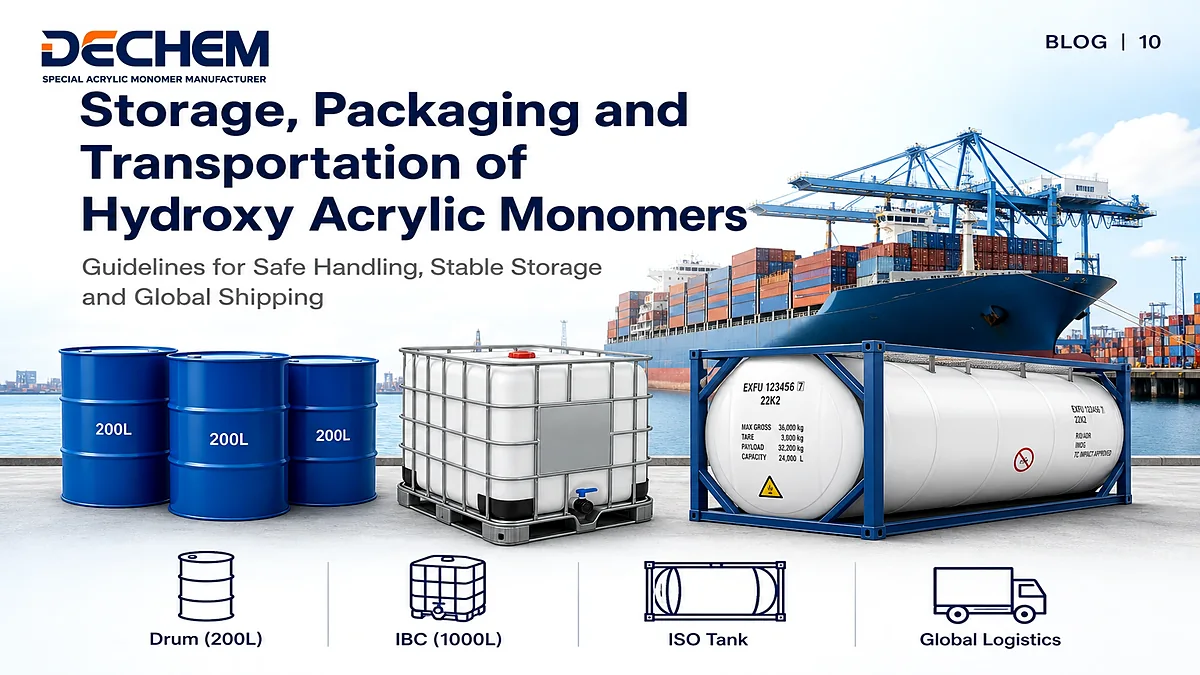
Storage, Packaging and Transportation of Hydroxy Acrylic Monomers
Practical guidance on drums, ISO tanks and bulk containers, and what to confirm before a shipment leaves the works.
Storage and transport decisions for a hydroxy-functional monomer are made once per consignment but affect shelf life, safety and the paperwork on arrival. This is a practical summary of what to confirm.
Packaging options
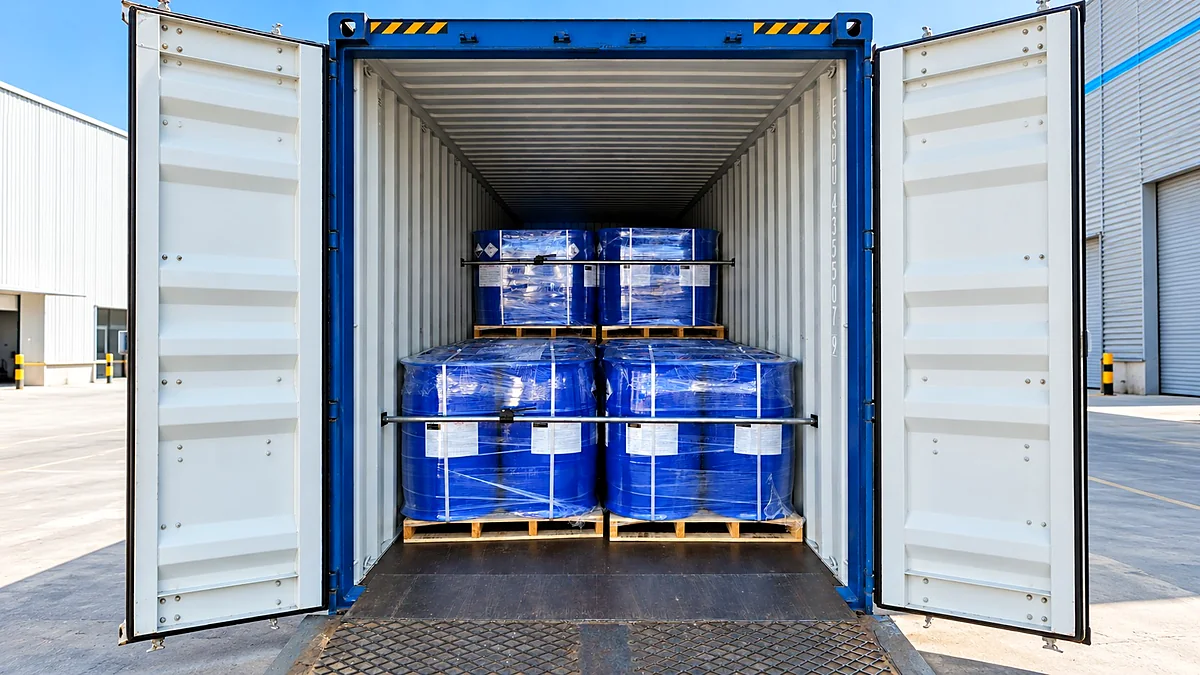
200 kg HDPE drums. The standard format. Familiar handling at the receiving warehouse, straightforward labelling, and a clean segregation between grades.
ISO tanks. Suitable for larger single movements and for continuous feed into production. Returns need to be agreed in advance, along with who arranges cleaning and inspection between uses.
Bulk containers. The highest throughput option for regular large-volume supply.
Storage conditions
Store in a cool, ventilated area. Keep the container tightly closed and protect from heat, sunlight and ignition sources. Refer to the safety data sheet for the specific product before handling, as transport classification and handling precautions are defined there.
Do not store different grades in a way that allows mixing or cross-contamination in transfer lines. Clean equipment between grades.
What to confirm before shipment
- Grade and purity against the TDS you are working from
- Drum or container marking, including batch identification
- Document set prepared for the destination country and port
- Seal integrity and container condition at loading
- For a first consignment, the demurrage and detention arrangement in writing
Documents for the import side
REACH documentation is available for 2-HEA, HEMA and HPMA, and management system certificates for the manufacturing operation are listed on the company pages. Import documentation requirements differ by destination, so confirm the required set with your customs broker for the specific port before the goods are loaded.
One practical recommendation
Agree the packaging, the document set and the destination port at the same time as the commercial terms, not afterwards. In a cross-border chemical supply, those three items are usually what causes delay — not the product itself.